

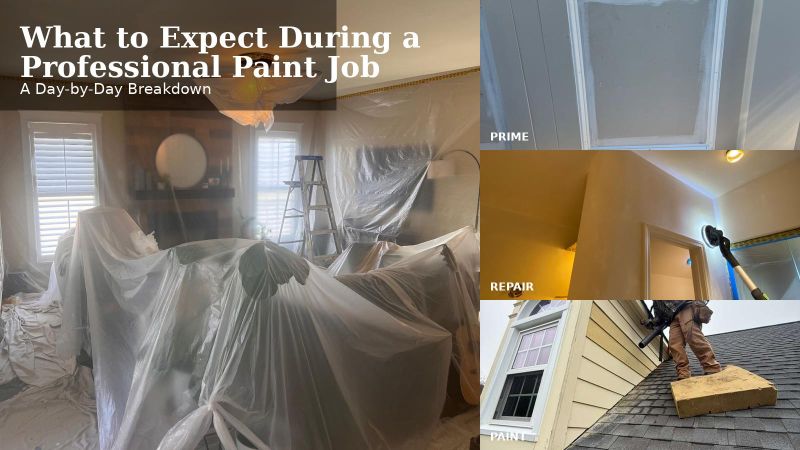
Hiring a professional painter should make your project feel easier, not more confusing. But if you have never gone through a full interior or exterior paint job before, it is natural to wonder what actually happens once the crew arrives.
How long will your home be disrupted? When does the painting actually begin? Why does prep seem to take so much time? And what should the final walkthrough include?
While every home and project is different, most professional paint jobs follow a clear sequence. Understanding that process ahead of time can help you feel more comfortable, better prepared, and more confident about the quality of the work.
Quick Answer
A professional paint project typically takes 3–7 days for interior work and 4–10 days for exterior painting, depending on the size of the project, the amount of prep needed, and the overall scope.
Most of that time is not spent painting. It is spent protecting the home, preparing surfaces, repairing problem areas, and making sure the finish actually lasts.
The Real Timeline: What Happens Day by Day
A professional paint job should feel organized, predictable, and carefully managed from the beginning. While the exact timeline can shift based on the size of the home, the condition of the surfaces, and the weather, most projects move through the same basic stages: protection, prep, application, finishing, cleanup, and a final walkthrough.


Protection & Setup
This is where a professional job separates itself immediately. Before paint is opened, the crew should be focused on protecting your home and creating an organized work area.
- Floors are covered with drop cloths or protective paper
- Furniture is moved or carefully protected
- Fixtures, hardware, and outlets are masked
- Exterior landscaping is protected for outside projects
At the end of the first day, your home may look temporarily disrupted, but it should still feel organized and protected — not chaotic.


Surface Prep
This is often the most important part of the entire project. The longevity of a paint job is usually decided before the first full coat ever goes on the wall, trim, siding, or exterior surface.
- Walls, trim, or exterior surfaces are sanded
- Drywall damage, nail holes, and cracks are repaired
- Failing exterior paint is scraped where needed
- Gaps and seams are caulked
- Primer is applied where appropriate
Most homeowners underestimate this step, but prep can easily account for 50–70% of the labor. It is also what determines how smooth the finish looks, how long it lasts, and whether the paint fails early.


First Coat Application
Now the transformation starts to show. The first coat establishes the base color and begins building coverage, but it is not always supposed to look perfect yet.
- Edges, ceilings, trim, and corners are carefully cut in
- The first coat is rolled or sprayed depending on the surface
- Coverage begins to develop across the room or exterior
The first coat can sometimes look slightly uneven while it dries. That is normal. The finish comes together with the second coat and detail work.


Second Coat & Finish Work
This is where the quality of the job becomes more visible. The second coat creates full coverage, richer color, and a more consistent finish.
- A second coat is applied for complete coverage
- Trim, doors, edges, and corners receive detail work
- Touch-ups are made for consistency
This stage is what gives the project that clean, even, professional appearance homeowners expect when the job is done right.


Cleanup & Final Walkthrough
The difference between an average job and a premium job often shows in the cleanup and final review. The project should not end with a mess left behind.
- Tape and protective coverings are removed
- Floors are cleaned and vacuumed
- Furniture is reset
- A final walkthrough is completed with you
This is your chance to review the finished work, ask questions, and point out any touch-ups before the crew wraps up.
What Most Homeowners Don’t Expect
Even when a painting project goes smoothly, there are a few parts of the process that can surprise homeowners. Knowing what to expect helps reduce frustration and makes the project feel more manageable.
Prep Takes Longer Than Painting
The actual painting is often the fastest part. The prep determines how smooth the finish looks, how long it lasts, and whether the paint fails early.
Your Home Will Be Temporarily In Progress
Furniture may be moved, rooms may be partially out of use, and there may be some noise or activity. A good crew keeps that disruption organized and controlled.
Communication Matters More Than Speed
The best projects include clear expectations, daily updates, and honest adjustments when prep, drying time, or weather affects the schedule.
A Professional Paint Job Should Feel Organized
A professional paint job should never feel like a mystery. From the first day of setup to the final walkthrough, homeowners should have a clear sense of what is happening, why it matters, and what comes next.
The best painting projects are built around preparation, protection, communication, and cleanup. Furniture should be covered, floors and surfaces should be protected, repairs should be addressed before paint is applied, and each coat should have the proper time and conditions to perform well.
For Charlotte homeowners, the goal is not simply to get paint on the walls. The goal is to work with a painting company that respects your home, explains the process, protects the space, and delivers a finished result that feels clean, complete, and professionally handled.
What a Professional Job Should Never Look Like
A professional paint job should never leave you wondering whether your home was protected or whether important prep steps were skipped.
- Paint on floors, fixtures, or hardware
- Missed spots or uneven coverage
- No sanding, scraping, patching, or prep
- A messy or disorganized jobsite
- A rushed timeline with no explanation
These are signs of a low-quality or rushed job. A professional crew should be able to explain the process clearly and show evidence of careful prep, clean work habits, and attention to detail.
Charlotte-Specific Considerations
For exterior painting projects in Charlotte, weather can affect the schedule. Rain, humidity, and moisture exposure can delay prep, drying, or second-coat application.
Surfaces may also need extra preparation because of moisture exposure, shaded areas, mildew, or previous coating failure. A professional team plans around these conditions instead of trying to force paint onto a surface before it is ready.
Typical Painting Project Timelines
These timelines are general guidelines. The actual schedule depends on the size of the project, the condition of the surfaces, the amount of repair work needed, and whether weather becomes a factor.
| Project Type | Typical Timeline |
|---|---|
| Single room interior | 1–3 days |
| Full interior | 3–7 days |
| Exterior repaint | 4–10 days |
| Cabinet refinishing | 5–10 days |
How to Make Your Project Go Smoothly
Before the crew arrives, remove small or fragile items, communicate any concerns early, and confirm colors and scope. These simple steps help avoid delays and keep the project efficient.
If there are areas of the home that matter most to you, point them out before work begins. That may include problem walls, trim details, previous paint failure, moisture concerns, or rooms that need to be finished first because of your schedule.
A professional paint job is not just about applying paint. It is a structured process built around protection, prep, precision application, detailed finishing, and a clean final walkthrough. When done right, the project should feel organized, predictable, and low stress.
Planning a Painting Project in Charlotte?
If you are thinking about painting your home, DeHaan Painting can walk you through the process, identify prep needs early, and give you a clear timeline before work begins.
Request a Painting Estimate