


Should You Paint, Refinish, Reface, or Replace Your Kitchen Cabinets?
You're tired of your kitchen cabinets. Maybe they're an outdated color. Maybe the finish is worn. Maybe you have oak cabinets with heavy grain, or perhaps you simply want a cleaner, more modern kitchen without tearing everything out. You start researching your options and quickly discover that there are several ways to update cabinetry.
You can paint it. You can refinish it. You can reface it. You can replace the doors. Or you can remove the cabinets entirely and start over. Each option can make sense. But they don't accomplish the same thing, and the right choice depends on what you actually dislike about your kitchen. At DeHaan Painting, we specialize in professional cabinet refinishing. Naturally, we love seeing existing cabinetry transformed with a properly prepared and sprayed finish.
But not every kitchen is a good candidate for refinishing. Sometimes the existing cabinet boxes are worth keeping, but the doors aren't. Sometimes the layout is the real problem. And sometimes the condition of the cabinetry makes replacement a more sensible investment. Before deciding what to do, it's worth understanding what each option actually involves.
1. Painting or Refinishing Your Existing Cabinets
If you like your kitchen's layout, your cabinets are structurally sound and you're primarily unhappy with the finish, professional cabinet refinishing is worth considering. This is particularly true when you have well-built cabinetry with solid doors, functional drawers and cabinet boxes that are still in good condition.
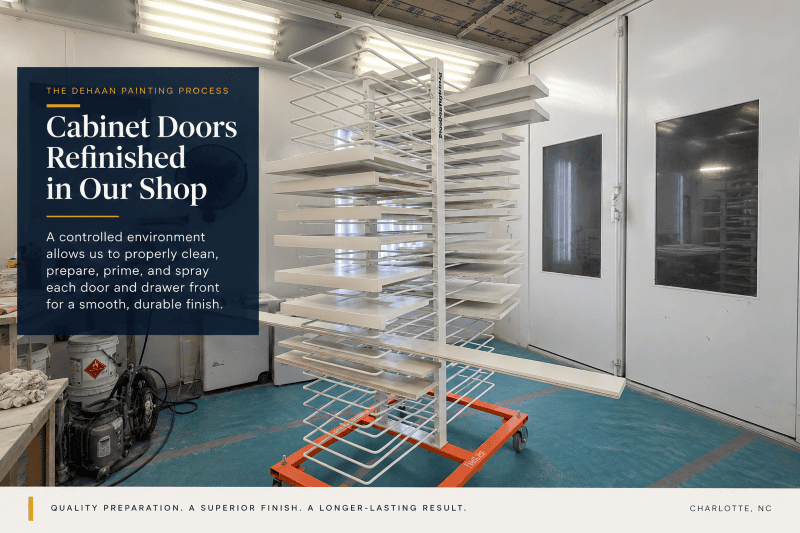
A professional refinishing project generally involves removing the doors and drawer fronts, thoroughly cleaning and preparing the surfaces, applying an appropriate primer and spraying a durable cabinet finish. At DeHaan Painting, we take the removable components to our shop. That gives us a controlled environment for cleaning, sanding, priming, spraying, drying and handling the doors and drawer fronts.
Meanwhile, the cabinet boxes receive essentially the same preparation process onsite. Our typical process includes:
- Removing and labeling doors, drawer fronts and hardware.
- Cleaning and degreasing the existing finish.
- Thoroughly sanding the surfaces.
- Applying an appropriate primer.
- Sanding again and correcting minor surface defects.
- Spraying two finish coats.
- Allowing appropriate drying and handling time.
- Reinstalling and adjusting the finished components.
The result is a coordinated new finish without replacing the underlying cabinetry.
When refinishing makes sense
Refinishing is often a good option when the cabinet boxes are sound, the doors and drawers function properly, the existing door style is acceptable and the layout works for your household. It's also worth considering when you want to preserve existing countertops, backsplash and flooring rather than take on a larger renovation.
If you like the kitchen you have but don't like how it looks, refinishing may address the actual problem.
2. Replacing Just the Cabinet Doors and Drawer Fronts
Sometimes the finish isn't the main issue. It's the door style. Imagine you have traditional raised-panel cabinet doors with decorative profiles, but you want a clean Shaker kitchen. Painting those raised-panel doors a modern color won't make them Shaker doors. The color will change. The profile won't. This is where replacing the doors and drawer fronts becomes an option.

You can retain the existing cabinet boxes, order new doors and drawer fronts in the desired style, and finish the new components to coordinate with the existing cabinetry. The cabinet frames, exposed ends and other visible surfaces can be painted as part of the project. This approach can deliver a substantial visual change without a complete cabinet replacement.
3. What Is Cabinet Refacing?
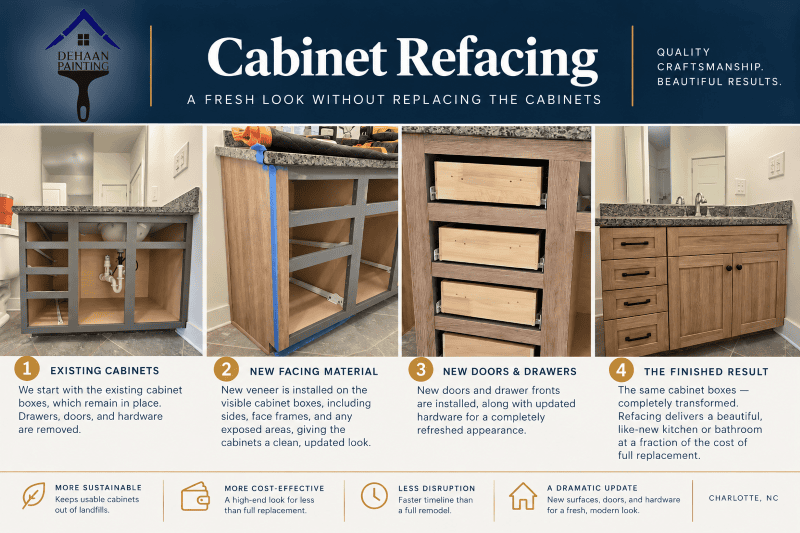
Cabinet refacing goes beyond simply replacing the doors. In a traditional refacing project, the existing cabinet boxes remain in place, but their visible exterior surfaces are covered with a new material, such as veneer or matching finished panels. New doors and drawer fronts are installed to coordinate with those surfaces. This can change the appearance of the cabinetry while preserving much of the existing structure.
However, it doesn't generally solve problems with the underlying layout, cabinet dimensions, storage configuration or deteriorated cabinet boxes.
Refacing vs. painting: what's the difference?
With painting, you're preparing and coating the existing visible surfaces. With refacing, you're applying new facing material to those surfaces. Both approaches can retain the existing cabinet boxes. The distinction matters because refacing involves additional materials, fabrication and installation work. It also requires careful attention to exposed edges, end panels, moldings and the relationship between the new doors and the existing cabinetry.
Refacing isn't automatically better than refinishing, nor is it automatically necessary to achieve a substantial visual transformation. It is simply a different way to update the visible surfaces. For homeowners considering refacing, I would compare the actual scope against both professional refinishing and full replacement before making a decision.
4. When Does Full Cabinet Replacement Make More Sense?
This is the part of the conversation that cabinet painters sometimes avoid. There are situations where I would not recommend investing heavily in refinishing the existing cabinets. The biggest question is whether you're happy with the cabinetry itself. If the layout is frustrating, refinishing won't fix it. If the drawers are poorly designed, refinishing won't make them deeper.
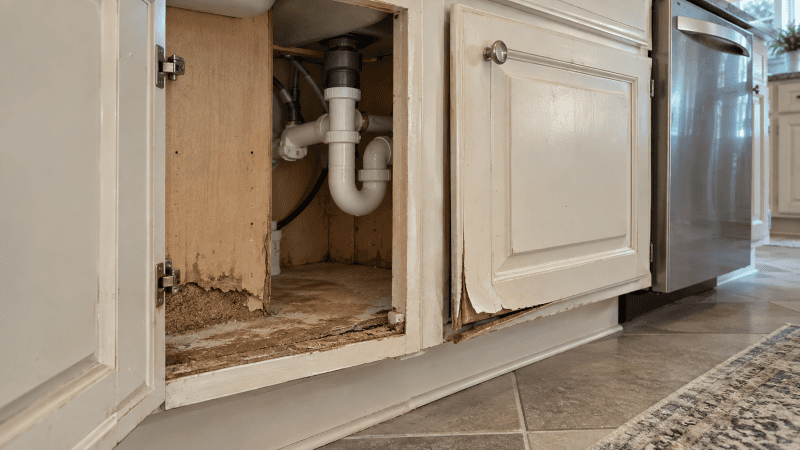
If you need more storage, want to move appliances or plan to substantially change the kitchen's footprint, you're talking about a different type of project. Full replacement may also be worth considering when the existing cabinetry has widespread structural damage, deteriorated boxes, significant water damage or construction that doesn't justify a substantial refinishing investment.
5. How Much Does Cabinet Refinishing Cost Compared With Replacement?
Cost is understandably a major part of this decision. But comparing options only by their starting prices can be misleading. A straightforward refinishing project is very different from a complex kitchen with extensive repairs, multiple colors, detailed moldings and a large number of doors and drawers. Likewise, replacement costs depend heavily on cabinet construction, layout changes, installation, countertops, backsplash, plumbing and electrical work.
For DeHaan Painting projects in Charlotte, our typical refinishing ranges are:
| Project | Typical DeHaan refinishing cost |
|---|---|
| Smaller project, such as a kitchen island | $3,000–$4,000 |
| Average full kitchen | $5,500–$7,000 |
| Large or complex gourmet kitchen | $10,000–$15,000 |
These are general project ranges, not a quote for a particular kitchen. For a more detailed breakdown of door counts, multiple colors, repairs, oak grain filling, hardware changes and other cost drivers, see our related article, How Much Does Kitchen Cabinet Painting Cost in Charlotte?
What about replacement costs?
I would be careful with any article that claims replacing cabinets costs one universal amount. A stock-cabinet replacement with a similar layout is not the same project as a custom kitchen renovation. And if replacing the cabinetry also requires new countertops, backsplash, plumbing, electrical work or flooring repairs, those costs need to be included in the comparison.
The useful question isn't simply: “Which option has the lowest starting price?” It's: “What is the total cost of achieving the kitchen I actually want?”
6. What About Painting Cabinet Interiors?
This is another detail homeowners should understand before comparing options. When we refinish an existing kitchen, the cabinet interiors are typically excluded unless specifically listed in the scope. Many existing cabinets have factory-finished or UV-coated plywood interiors that are already durable and functional. If they're in good condition, we generally protect them rather than automatically painting them.
Painting interiors adds substantial preparation and coating work, particularly when there are numerous openings, fixed shelves or detailed storage configurations. Depending on the situation, interior refinishing can range from a minor addition to approximately $250 per opening for cleaning, sanding, priming and painting, including one or two shelves.
If your goal is to change every visible surface inside and outside the cabinetry, make sure that expectation is included when comparing refinishing, refacing and replacement proposals. Otherwise, you may be comparing very different finished products.
7. Can You Change Cabinet Hardware Without Replacing the Cabinets?
Absolutely. New hardware can make a significant difference in how a refinished kitchen looks. If the new handles or knobs use the existing hole pattern, reinstalling them is generally straightforward. However, changing from knobs to pulls—or selecting pulls with a different hole spacing—may require filling the old holes, sanding, priming and drilling a new pattern.
At DeHaan Painting, this type of hardware modification typically adds approximately $20–$30 per piece. It's a small detail that can become meaningful across a kitchen with dozens of doors and drawers. If you're planning to change hardware, decide on the new style and hole spacing before refinishing begins. That allows the necessary repairs to become part of the preparation process rather than an afterthought.
8. How Long Will Professionally Refinished Cabinets Last?
This is an important question, but I wouldn't give homeowners a universal number of years. The service life of a cabinet finish depends on several factors:
- The condition of the existing cabinetry
- Surface preparation and adhesion
- The primer and finish system
- Appropriate drying and curing
- Everyday use and cleaning habits
- Moisture and repeated impact
- The condition of the underlying coating
A properly refinished cabinet can provide years of useful service. But no finish makes a cabinet indestructible. The area around a sink, for example, experiences different conditions than an upper cabinet that is rarely touched. And a family kitchen with heavy daily use will experience different wear than a lightly used secondary kitchen.
9. Five Questions to Ask Before Deciding
Before choosing between refinishing, refacing and replacement, I'd work through these five questions.
1. Do I like my current kitchen layout?
If the answer is yes, retaining the existing cabinet boxes may be practical. If the answer is no, consider whether a larger renovation is already part of your long-term plan.
2. Are my cabinet boxes structurally sound?
Look for water damage, swelling, deteriorated materials, loose joints and other significant defects. Cosmetic wear is different from structural deterioration.
3. Do I like the existing door style?
If you like the profile, refinishing may accomplish what you want. If you want a completely different door style, compare replacement doors or refacing.
4. Am I comfortable with the characteristics of the existing material?
For example, painted oak may retain visible grain unless additional filling work is performed. Make sure you understand what the finished surface will look like.
5. What else am I planning to change?
Countertops, backsplash, flooring, appliances and layout changes can all affect the decision. You don't want to invest in refinishing components that may soon be removed.
Frequently Asked Questions
Is it cheaper to paint kitchen cabinets or replace them?
Professional refinishing generally involves retaining the existing cabinetry rather than purchasing and installing an entirely new kitchen. However, actual costs depend on cabinet condition, complexity and the scope of any replacement project. Compare complete proposals rather than starting prices alone.
Is cabinet refinishing the same as cabinet painting?
The terms are often used interchangeably. In this article, professional refinishing refers to a comprehensive preparation, priming and sprayed-finish process—not simply applying paint over an existing surface.
Can I replace cabinet doors but keep the existing boxes?
Yes, provided the boxes are sound and compatible with the new door configuration. Existing frames and exposed surfaces can be finished to coordinate with the new doors and drawer fronts.
Can oak cabinets be painted without seeing the grain?
Oak's open grain may remain visible after painting. Additional grain filling can reduce its appearance, but that process adds substantial labor and cost. If a completely smooth, different-style door is the goal, replacement doors are worth considering.
Does refacing change my kitchen layout?
Generally, no. Refacing retains the existing cabinet boxes, so it typically preserves their dimensions and arrangement.
Should I refinish cabinets before replacing my countertops?
It depends on the overall project. If you're keeping the existing cabinet boxes and layout, the work can often be coordinated. If you're considering significant layout changes or cabinet replacement, finalize those decisions before investing in refinishing.
Can damaged cabinets still be refinished?
Minor cosmetic damage can often be repaired during preparation. Significant water damage, swelling, structural deterioration or a failing underlying finish may require additional work or make replacement more appropriate.

Final Thoughts: Keep What's Worth Keeping
You don't have to replace an entire kitchen to change how it looks. And you don't have to refinish cabinets that no longer meet your needs. If your cabinet boxes are sound, your layout works and you're primarily unhappy with the finish, professional refinishing may be a practical way to transform the space. If the doors are the problem, consider replacing them.
If you want new visible surfaces while retaining the boxes, look at refacing. And if the cabinetry is deteriorated or the layout no longer works, a larger replacement project may be worth evaluating. At DeHaan Painting, our goal is to help Charlotte homeowners understand those differences before making a decision. A beautiful finish matters. But making the right decision about the cabinetry underneath it matters just as much.

Considering Cabinet Refinishing in Charlotte?
If you're considering updating your kitchen cabinets, we'd be happy to evaluate the existing finish and cabinetry, discuss your goals and explain what a professional refinishing project would involve. We can also help you understand when additional repairs or alternative approaches deserve consideration. Learn more about our Charlotte kitchen cabinet painting and refinishing process , or contact DeHaan Painting to discuss your project.
Schedule a ConsultationDeHaan Painting
Charlotte’s Premier Painter
(980) 224-3191