


You’ve just had your house painted, everything looks great, and then someone brushes against the hallway wall with a backpack or bumps it with a laundry basket. Suddenly, there’s a black mark on your brand-new paint.
It’s frustrating, especially when you’ve just invested in having your home professionally painted.
So why does this happen? Is it cheap paint, improper application, or just something you should expect?
The answer is that not all paints are created equal, and even high-quality paints have limitations. The product you choose, how long it’s been on the wall, and the type of contact it receives all play a role.
Not All Scuffs Are the Same
First, it’s important to understand what you’re actually seeing.
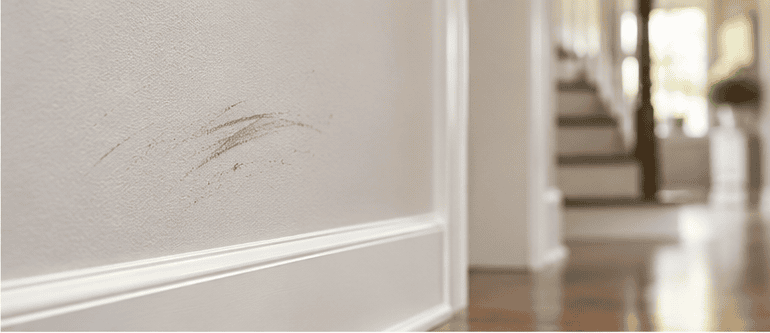
Sometimes a scuff is simply material transferred onto the wall. Think about a rubber shoe rubbing against a stairwell or a piece of furniture bumping a hallway. The paint itself may be perfectly fine, but something has left a mark on the surface.
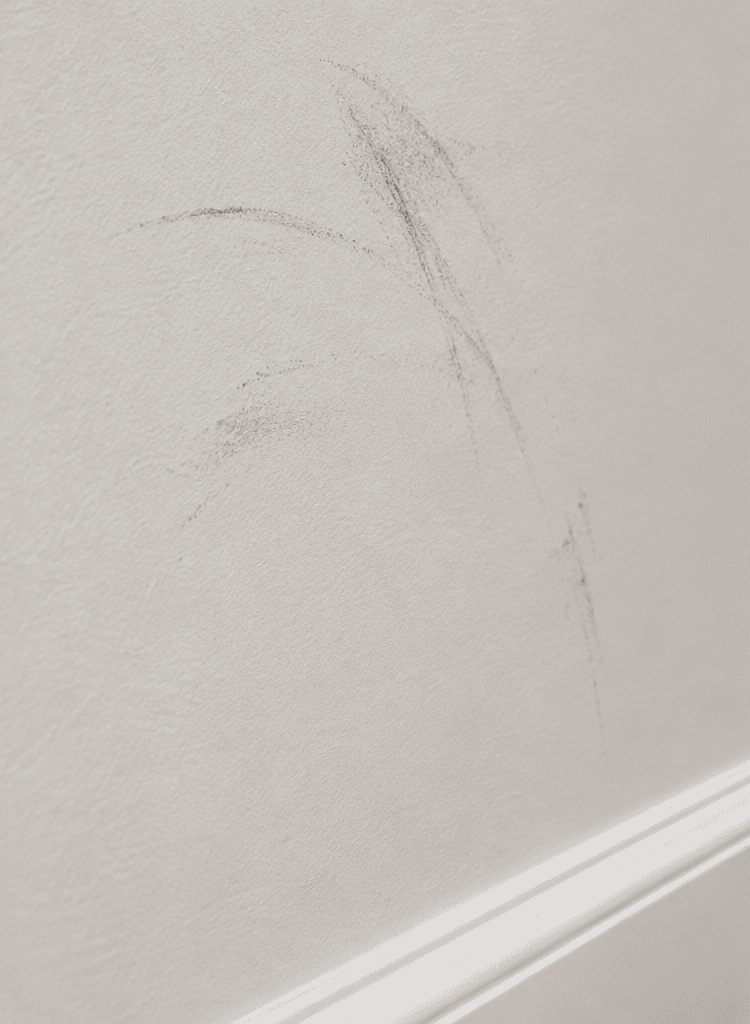
Other times, the paint itself has been affected.
You may notice a shiny spot where something rubbed against a flat or matte wall. This is called burnishing, and it’s especially noticeable on darker colors and lower-sheen finishes. The friction actually changes how the paint reflects light.
Then there’s actual damage, where the paint has been scratched, chipped, or removed. That’s a different issue altogether and typically requires a touch-up or repair rather than cleaning.
The important thing to remember is that scrubbing harder isn’t always the solution. In fact, aggressive cleaning can sometimes make the problem worse.
Fresh Paint Needs Time to Cure
One thing many homeowners don’t realize is that paint can be dry to the touch without being fully cured.
There’s a difference between drying and curing.
Most interior paints dry relatively quickly, allowing us to apply a second coat the same day. However, developing their full durability and resistance to cleaning can take considerably longer.
During that time, freshly painted walls can be more susceptible to scuffs, scratches, and damage from cleaning.
The actual curing time depends on the specific product, temperature, humidity, and other conditions, so we always recommend following the manufacturer’s instructions.
If you’ve just had your home painted, be especially careful when moving furniture back into place, hanging pictures, or cleaning the walls during those first few weeks.
The Paint You Choose Makes a Difference
This is probably the biggest factor we discuss with homeowners.
A guest bedroom that rarely gets used doesn’t need the same level of durability as a busy hallway, staircase, mudroom, or kitchen.
And while most paint manufacturers offer premium products, a premium paint isn’t necessarily the best paint for every application.
For example, we frequently use Sherwin-Williams Duration Home for residential interiors. It’s a great all-around product that offers good coverage, washability, and durability.
However, for homes with children, pets, or high-traffic areas where walls regularly get bumped or rubbed, we may recommend something specifically designed for scuff resistance.
Two products worth considering are:
-
Sherwin-Williams Scuff Tuff: Designed to resist scuffing in high-traffic areas while maintaining a quality finish.
-
Benjamin Moore Scuff-X: Another excellent option specifically developed to withstand frequent contact and everyday wear.
We’ve used specialty coatings like these in homes and commercial spaces where traditional wall paints may not hold up as well.
Does that mean everyone needs Scuff Tuff or Scuff-X? Absolutely not.
But if you’re constantly cleaning marks off your hallway walls, it may be worth spending a little more on a product designed for that application.
You can learn more about some of the products we use in our Top 4 Interior Paints: A Side-by-Side Comparison.
Does Paint Sheen Affect Scuff Resistance?
Yes, but not always in the way homeowners expect.
Generally speaking, higher-sheen paints tend to be easier to clean and more resistant to certain types of wear. That’s one reason satin and semi-gloss finishes have traditionally been used in bathrooms, kitchens, and on trim.
However, higher sheen also reflects more light, which can highlight drywall imperfections, repairs, and uneven surfaces.
Flat and matte finishes are popular because they create a softer appearance and help conceal imperfections. The trade-off is that some products are more susceptible to burnishing or showing marks when rubbed.
Fortunately, paint technology has improved considerably. There are now matte and eggshell finishes that offer excellent durability without having to make your walls noticeably shinier.
Our recommendation is to choose the paint product first, based on how the room is used, and then select the sheen that gives you the appearance you’re looking for.
Simply choosing a higher sheen doesn’t automatically mean you’re getting a better or more durable paint job.
How Should You Clean Scuffs Off Painted Walls?
Before reaching for a Magic Eraser or scrubbing sponge, start with the least aggressive cleaning method.
Once the paint has cured sufficiently for cleaning, we generally recommend starting with a soft, damp cloth and following the paint manufacturer’s cleaning instructions.
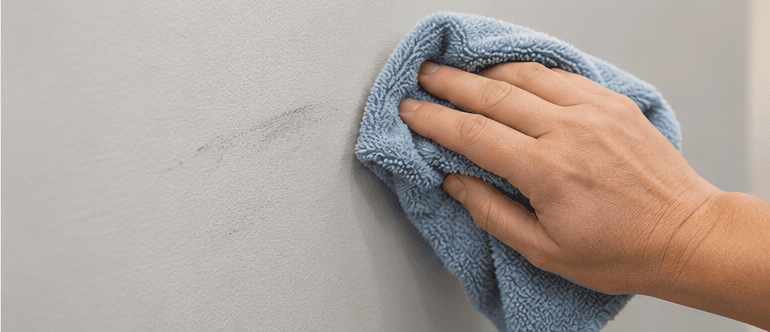
If the mark doesn’t come off easily, you can try an approved mild cleaning solution. Always test an inconspicuous area first.
Be particularly careful with abrasive products, including Magic Erasers. While they can remove marks, they can also change the sheen or wear away the paint finish.
We’ve seen homeowners turn a small scuff into a much larger shiny spot simply by scrubbing too aggressively.
If the paint has been burnished or damaged, cleaning may not fix it. In those cases, touching up or repainting the affected wall may be necessary.
And remember, paint touch-ups don’t always blend perfectly, particularly with darker colors, higher sheens, or finishes that have been on the wall for a while.
What We Recommend at DeHaan Painting
When we’re estimating an interior painting project, we’re not just looking at square footage and choosing a paint color.
We also consider how the space is used.
A formal dining room, children’s playroom, kitchen, and stairwell may all benefit from different paint products, even if the homeowner wants the same color and sheen throughout the house.
We also believe proper surface preparation and applying the correct paint system are critical to getting a finish that lasts.
The most expensive paint on the shelf won’t make up for poor preparation, and even the best paint isn’t completely scuff-proof.
Our goal is to recommend a product that looks great, holds up to everyday use, and makes sense for your home and budget.
If you’re planning an interior painting project in Charlotte, we’d be happy to discuss the options and help you choose the right products for your home.
Planning an Interior Painting Project in Charlotte?
If your hallway, stairwell, or mudroom walls keep picking up scuff marks, we can help you choose a paint and sheen suited to how you use the space.
We’ll walk through the areas that get the most wear and explain which finishes make sense for your home.
Helping thousands of families in Plaza Midwood, NoDa, Chantilly, Dilworth, Elizabeth, Myers Park, South Park, Barclay Downs, and surrounding areas.
DeHaan Painting
“Charlotte’s Premier Painter”
Interior House Painting – Kitchen Cabinet Painting – Surface Preparation – Drywall Repairs – Walls, Ceilings, Trim & Doors
Phone: (980) 224-3191
Email: info@dehaanpaints.com