


A touch-up can stand out even when the paint came from the original can.
You move a picture, repair a small nail hole, and reach for the leftover paint. The label matches. The paint came from the original can. It seems like a simple fix—until the paint dries and you can still see exactly where you worked.
Sometimes the spot looks lighter. Sometimes it looks darker. Sometimes the color seems right, but a shiny patch appears when daylight comes through the window. Before you add another coat or assume the entire room needs repainting, it helps to understand what you are seeing.
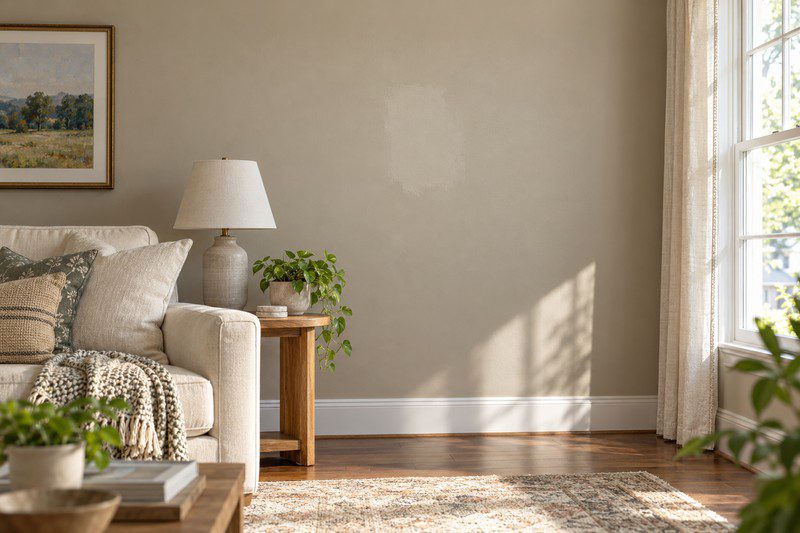
The Color Can Be Right While the Finish Looks Wrong
Think of a wall as a finished surface, rather than simply a color. Light reflects off that surface, revealing differences that are easy to miss when you look straight at it.
A repair might look fine from the doorway but stand out beside a window. The patch can catch the light differently because its sheen or texture does not match the surrounding paint. What looks like a color problem may actually be a difference in how the surface reflects light.
This is one reason a paint label cannot tell the whole story. Knowing the color is useful, but knowing the manufacturer, exact product, and sheen gives a painter a much better starting point.
Why Paint From the Original Can Can Still Show
Leftover paint can be helpful, but it does not guarantee an invisible repair. The original coat covered a broad area under one set of conditions. A later touch-up covers a small spot, sometimes over a different surface, with a different amount of paint.
Sherwin-Williams explains that the way moisture leaves the paint—including absorption into the surface—affects its final appearance. That helps explain why paint from the same can can produce different results when it is applied later.
Storage matters too. Paint that has lost moisture or deteriorated may no longer behave like the original material. A tightly sealed, properly stored can gives you a better starting point than paint that has been exposed to temperature extremes or left with a loose lid.
The question is not simply whether you have the original paint. It is whether that paint is still usable and whether the touch-up can reproduce the surrounding finish closely enough.
A Smooth Repair Can Stand Out on a Textured Wall
A repaired nail hole may feel perfectly smooth and still look different after painting. The surrounding wall may have a fine roller texture, while the repair is flatter or has a visible edge.
Fresh repair material can also absorb paint differently from an already painted wall. The repair may need suitable preparation and primer before the finish paint goes on. Painting over it repeatedly does not necessarily correct the difference underneath.
Application adds another variable. A brush leaves a different pattern from a roller. Even a roller touch-up can leave a noticeably heavier texture if it does not resemble the original finish.
Benjamin Moore identifies color, sheen, and surface texture as separate parts of a successful match. All three deserve attention when a repair stays visible.
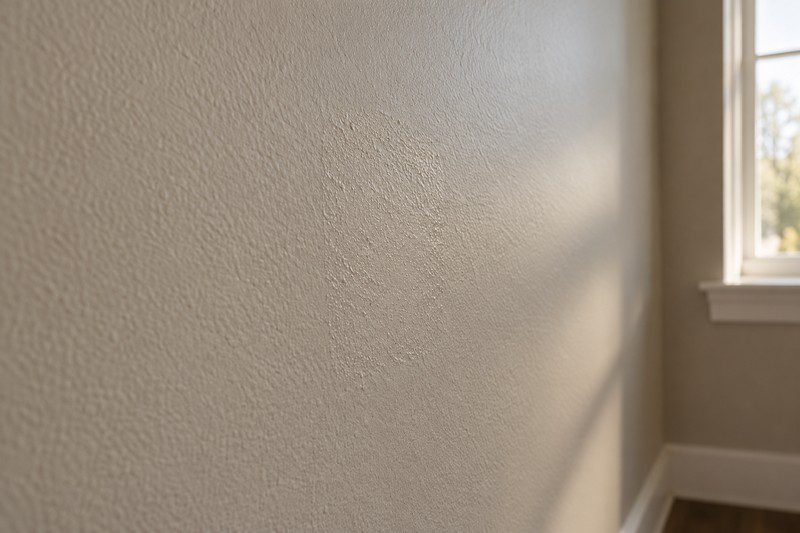
Lighting Can Make a Small Difference Obvious
Imagine the same wall at two different times of day. In the morning, soft light makes it look even. Later, sunlight travels across it from a nearby window, and the touched-up area suddenly appears.
That does not necessarily mean the paint changed during the afternoon. The light changed what you could see.
Long hallway walls, large open living spaces, and walls beside windows can make small differences especially noticeable. A repair that looks acceptable under one ceiling light may look quite different in ordinary daylight.
Before deciding whether a touch-up worked, let the paint dry according to its product instructions and look at the wall under the lighting you normally use. Judging wet paint—or inspecting only from one angle—can lead to unnecessary extra painting.
When a Small Touch-Up May Be Enough
There are situations where a limited repair makes sense. A small mark on a recently painted wall may be a reasonable candidate when the original product is available, the surface is sound, and the surrounding finish can be closely reproduced.
A mark may also be removable without painting. Before treating every scuff as damage, consider whether gentle cleaning appropriate for the coating will remove it. Aggressive scrubbing can change the appearance of the finish, so more effort is not always better.
The goal is a result that looks consistent under normal use. A discreet repair in a low-visibility location presents a different challenge from a patch at eye level on the main living-room wall.
When Repainting One Wall Makes More Sense
If a dried touch-up remains obvious, expanding the patch over and over can leave a larger area that still does not blend. At that point, repainting the wall to its natural boundaries may be the more sensible approach.
Corners and trim provide stopping points. Painting a complete wall creates a continuous finish across that surface rather than asking a small patch to disappear into the older coating.
Repainting one wall may be worth considering when there are several repairs, visible differences in sheen, an uncertain paint history, or strong side lighting that highlights every attempted touch-up.
It is still important to prepare the repaired areas correctly. A fresh coat across the wall cannot reliably hide an uneven patch underneath it.
What to Have Ready When You Ask for Help
You do not need to diagnose the coating problem yourself. A few details can help a painter understand the situation before recommending the next step:
A photograph of the entire wall and a closer view of the patch.
The original paint label, if available, showing the product, color, and sheen.
An approximate date when the wall was painted.
What was repaired and what has already been tried.
Whether the patch is noticeable all day or mainly in certain lighting.
Those details help frame a useful conversation: can the existing finish be matched acceptably, should one wall be repainted, or does the room have broader wear that deserves attention?
Need Help With a Wall That Will Not Blend?
A small repair should not leave you guessing about a much larger painting project. If you have a wall that looks patchy after touch-ups, DeHaan Painting can assess the surface and discuss an appropriate approach for your Charlotte-area home.
Explore our interior painting services or contact DeHaan Painting at (980) 224-3191 to discuss your project.
Frequently Asked Questions
Why does my touch-up look darker than the wall?
A darker-looking patch is not always the wrong color. Differences in application, surface texture, sheen, and drying can change how it appears. Evaluate it after the recommended drying time and under normal room lighting before deciding what needs correction.
Does using the original paint guarantee a match?
No. It helps identify the original coating, but storage, application, and the condition of the wall can still affect the result. Paint from the original can may leave a visible repair.
Do I need to repaint the entire room?
Not necessarily. A painter may recommend a limited touch-up or repainting one wall to its natural boundaries. A larger project should be based on the condition and appearance of the other surfaces, rather than one patch alone.
Are flatter paints easier to touch up?
Generally, lower-sheen finishes can make touch-ups less noticeable than glossier finishes. Product formulation and surface conditions still matter, so a flat or matte label does not guarantee an invisible repair.
Compare coating options in DeHaan’s guide to four interior paints.
Planning an Interior Painting Project in Charlotte?
If paint touch-ups are leaving visible patches, we’d be happy to walk through your home, look at the existing finish, and discuss whether a limited repair or repainting one wall makes sense.
We’ll explain what we believe should—and shouldn’t—be part of the project, so you understand the recommendation before deciding how to move forward.
Helping thousands of families in Plaza Midwood, NoDa, Chantilly, Dilworth, Elizabeth, Myers Park, South Park, Barclay Downs, and surrounding areas.
DeHaan Painting
“Charlotte’s Premier Painter”
Interior House Painting – Kitchen Cabinet Painting – Surface Preparation – Drywall Repairs – Walls, Ceilings, Trim & Doors
Phone: (980) 224-3191
Email: info@dehaanpaints.com
Feature image is an AI-generated illustration using supplied photographs of Matt as a likeness reference; it does not document an actual customer visit.