

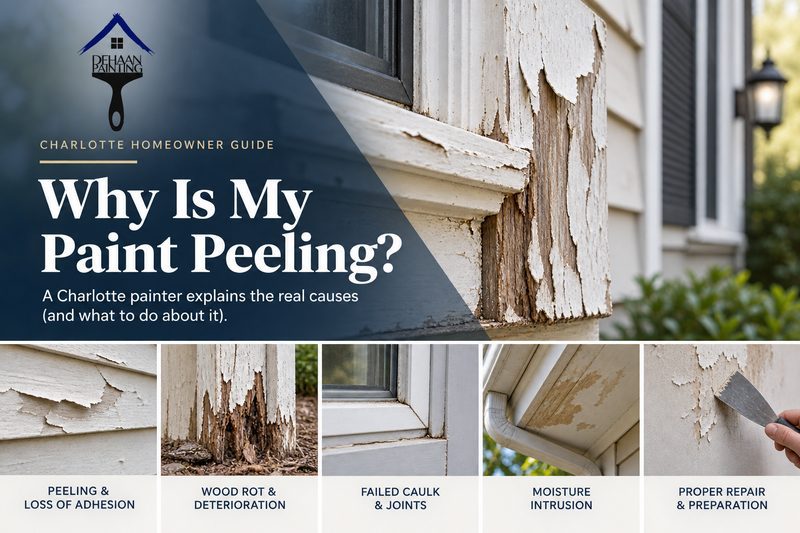
Why Is My Paint Peeling? When a Paint Problem Isn’t Really a Paint Problem
If you’re asking “why is my paint peeling?”, the paint itself may be only the visible symptom. The real cause can be moisture, a failing older coating, deteriorated wood, movement, or preparation that never gave the new finish a sound surface to bond to.
Paint peels when the coating loses adhesion to the surface beneath it. Poor preparation can absolutely cause that, but so can moisture, wood deterioration, an unstable previous coating, repeated movement at a joint, or exposure that is harder on one part of the home than another.
The important point is that peeling paint tells you what happened. It does not always tell you why it happened. Before repainting, the cause should be understood.
You may first notice a bubble beside a window, a strip of paint lifting from trim, or a joint that seems to crack again no matter how often it is recaulked. The natural conclusion is that the paint failed, and sometimes that is exactly what happened. A surface may not have been cleaned properly, the wrong primer may have been used, or the coating may never have bonded well in the first place.
But after working on homes throughout Charlotte for years, we have learned that paint failure often tells a larger story. Moisture can get behind a coating, wood can deteriorate beneath an otherwise decent-looking finish, and older layers can lose adhesion underneath newer paint. On some homes, intense sun and repeated expansion and contraction simply expose weaknesses faster on one elevation than another.
Why Is My Paint Peeling? Start With Where the Failure Shows Up
The pattern of the failure is often more useful than the brand or color of the paint. Before deciding what to put back on the surface, we want to understand what the location is telling us.

1. Moisture Is One of the Biggest Causes of Paint Failure
Water and paint do not work particularly well together when the water gets where it is not supposed to be. On the exterior of a Charlotte home, that moisture may come from failed caulk, roof or flashing issues, overflowing gutters, water entering around windows and doors, horizontal surfaces that hold water, irrigation repeatedly wetting the house, deteriorated wood, or moisture moving through masonry.
Inside the home, the signs may look different but the principle is the same. Bubbling, staining, or peeling can be related to plumbing leaks, roof leaks, bathroom humidity, condensation, or HVAC-related water. Scraping the loose paint and applying a stain-blocking primer may improve the appearance, but that only makes sense after the source has been addressed.
What Paint Can Do
A proper coating system can protect a sound surface, improve appearance, and help resist normal weather exposure.
What Paint Cannot Do
It cannot repair a roof leak, stop water from entering behind trim, or turn deteriorated wood back into a sound substrate.

2. An Older Paint Layer Is Failing
This is one of the more surprising situations for homeowners. A house may have been painted five years ago, yet the failure can begin in a coating that was applied fifteen years before that. If the older layer loses its bond to the substrate, the newer paint can come off with it even though the new topcoat adhered perfectly well to the layer directly beneath it.
That is why older Charlotte homes with multiple generations of coatings deserve a different kind of inspection than new wood or new drywall. Every new coat is relying on what is already there to remain attached. When an old layer is unstable, another premium topcoat does not make that foundation stronger.
Sometimes the newest paint is not the layer that failed. It is simply the layer that came off with everything underneath it.
3. Poor Preparation Can Absolutely Cause Peeling Paint
Sometimes the simplest explanation is still the correct one. Paint needs a surface it can bond to, and dirt, chalk, gloss, loose material, grease, and other contamination can all interfere with that bond. Depending on the substrate and its condition, proper preparation may include cleaning, removing loose material, sanding, feathering rough edges, priming exposed areas, correcting defects, and allowing damp surfaces to dry before coating.
The goal is not to perform the most aggressive preparation possible. It is to perform the preparation the surface actually needs. A sound surface may need relatively little intervention, while another area may need significant repair before a coating system has a reasonable chance to perform.
Why It Matters
More preparation is not automatically better. Appropriate preparation is better. The surface condition should determine the work, not a one-size-fits-all checklist.
4. Rotten or Deteriorated Wood Is Not a Painting Problem
There are times when preparation exposes something more serious than loose paint. Exterior trim can look acceptable until scraping or sanding reveals soft, deteriorated wood underneath. At that point, the question is no longer which primer to use. The question becomes whether the material can still provide a sound surface for paint at all.
Depending on the extent of the damage, the right answer may be repair, epoxy restoration, or replacement before painting continues. Fresh paint can make deteriorated wood look dramatically better for a short time, but appearance is not the same as a durable repair.

During an estimate, we can identify obvious rot and visible damage, but paint and caulk can hide quite a bit. Sometimes the true condition is not clear until preparation begins. We would rather have the uncomfortable conversation that something needs repair than put fresh paint over a weak substrate and pretend the problem has been solved.
5. Why Does Caulk Keep Cracking in the Same Place?
When the same joint has already been recaulked several times and keeps splitting, simply choosing a different tube of caulk may not address the real issue. Homes move, wood expands and contracts, and different building materials move at different rates. Some joints are also larger or more active than a particular sealant can reasonably accommodate.
Sometimes better preparation or a different sealant solves the problem. Sometimes a carpentry repair makes more sense. And in other cases, the joint will always require periodic maintenance because of the way the home is constructed. A professional painter should be willing to explain which situation you are looking at instead of automatically treating every recurring crack as a caulk problem.

6. Charlotte Sun and Heat Can Make One Side of Your House Age Faster
Exterior paint does not experience the same conditions on every side of a house. A protected elevation beneath mature trees may receive relatively little direct sunlight, while another side of the same home spends hours in intense afternoon sun. Darker colors can make that difference more noticeable because they absorb more solar energy.
Heat contributes to expansion and contraction of siding, trim, doors, and other substrates, while UV exposure contributes to fading and coating degradation over time. This does not mean dark colors are automatically a bad choice or that sunny elevations cannot be painted successfully. It means exposure should be part of the coating decision instead of assuming every side of the house lives under identical conditions.
7. Interior Peeling Paint Can Point to a Different Set of Problems
Not every paint failure happens outside. Inside the home, peeling or bubbling may be related to previous water damage, active plumbing or roof leaks, bathroom humidity, condensation, poor adhesion to an older coating, contaminated surfaces, incompatible coatings, or even failed drywall or plaster beneath the paint.
Location matters here, too. Peeling around a shower deserves a different investigation than lifting paint across an entire bedroom, and a recurring ceiling stain deserves a different response than paint releasing from an old glossy door. The repair should match the cause rather than simply cover the symptom.
Can You Just Scrape the Peeling Paint and Repaint It?
Sometimes you can. If the failure is isolated, the underlying cause has been corrected, and the surrounding coating is sound, the repair may be relatively straightforward: remove loose material, feather the edges, prepare the exposed substrate, prime appropriately, and repaint.
The harder question is where the failing paint actually stops. If scraping one loose area causes the surrounding coating to keep releasing from the substrate, the affected area may be much larger than it first appeared. You do not really know where sound paint begins until the surface is tested and prepared.

How Do You Know Whether a Paint Failure Is Serious?
A small chip caused by impact is very different from paint bubbling across an entire wall. The situations that deserve more investigation are the ones that suggest an ongoing condition rather than isolated damage.
Why a More Expensive Paint Does Not Automatically Solve the Problem
We use premium coatings every day, but there is no gallon of paint expensive enough to compensate for an unsound substrate. A high-performance coating can still peel over loose paint, the best primer available cannot repair rotten wood, and three coats will not make a failing underlying layer more secure.
Product matters, but the coating system is only as reliable as the surface supporting it.
Don’t Start With the Paint Store
If paint is peeling on our own house, the first question is not which paint has the best warranty. We want to know whether the substrate is wet, whether the wood is deteriorated, whether an older coating let go, whether the failure is limited to the sunny side, or whether a joint is moving. Only after those questions are answered does it make sense to talk about primer and finish paint.
Sometimes the right recommendation is not a painting solution at all. It may be a roofer, carpenter, plumber, gutter company, or another trade that needs to go first. Saying that is not losing a painting project; it is helping a homeowner avoid paying to do the same work twice.
Frequently Asked Questions About Peeling Paint
Can I paint directly over peeling paint?
No. Loose or poorly adhered material should be removed and the remaining surface evaluated before repainting. Painting over an unstable coating does not restore its bond to the substrate.
Does peeling paint always mean the painter did something wrong?
No. Improper preparation or application can cause peeling, but moisture, substrate deterioration, movement, and failure of older underlying coatings can also be responsible.
Why is my exterior paint peeling in only one area?
Localized failure often points to a localized condition such as moisture, sun exposure, deteriorated material, a construction detail, or an older repair. The location and pattern should be investigated before repainting.
Why does paint keep peeling around my windows?
Possible causes include water intrusion, failed sealants, deteriorated wood, condensation, previous coating failure, or inadequate preparation. Repeated failure in the same location is a reason to look beyond the paint itself.
Will primer stop paint from peeling?
Primer can improve adhesion, seal certain substrates, and block stains, but it cannot make loose material sound or correct active moisture, rot, or structural movement.
Is expensive paint less likely to peel?
A quality coating can perform better when it is part of the correct system, but even premium paint can fail when applied over an unstable, wet, contaminated, or deteriorated substrate.
Final Thoughts: Fix the Cause, Not Just the Symptom
Peeling paint tells you something has failed, but it does not always tell you what failed. Sometimes the answer is preparation, sometimes it is the previous coating, and sometimes it is moisture, deteriorated wood, movement, or another condition with the house.
That is why the better first question is not “What paint should we use?” It is “Why did the old paint fail?” Once that is understood, you can choose a repair and coating system that has a much better chance of lasting.
At DeHaan Painting, that is how we approach paint failure on Charlotte homes. We would rather explain why an area needs additional repair—or why another trade should address something first—than simply cover the symptom and hope it does not come back. A good paint job should not just look right when the project is finished. The work underneath it should make sense, too.
Seeing Peeling or Failing Paint on Your Charlotte Home?
If you are considering repainting because of peeling, bubbling, cracking, or another coating failure, the first step is understanding what you are looking at. DeHaan Painting can evaluate the condition as part of the painting process, explain what we believe is happening, and recommend the preparation or repairs that make sense before new coatings are applied.
The goal is not simply to put new paint over old paint. It is to give the new system a sound surface to perform on.
Schedule a ConsultationHelping thousands of families in Plaza Midwood, NoDa, Chantilly, Dilworth, Elizabeth, Myers Park, South Park, Barclay Downs, and surrounding areas.
DeHaan Painting
“Charlotte’s Premier Painter”
Exterior House Painting – Interior House Painting – Surface Preparation – Wood Repair – Trim, Siding & Doors
Phone: (980) 224-3191
Email: info@dehaanpaints.com